
Can BPC-157 and Other Peptides be Compounded Yet? The Path to Legal Peptide Compounding
The Road to Legal Peptide Compounding: Where BPC-157 and Others Stand Today
Can It Be Legally Compounded? Peptide Status Tracker
The quick answer: It depends on who’s making it. As of October 28, 2026, a 503A pharmacy can compound six of these peptides by prescription, if it meets strict conditions set by HHS. A 503B outsourcing facility still can’t.
Here’s why, in plain English:
- 503A pharmacies: allowed under conditions. HHS announced it won’t take enforcement action against 503A pharmacies compounding BPC-157, TB-500, KPV, MOTS-c, Epitalon and Semax, as long as they meet every condition. That isn’t FDA approval, and these peptides still aren’t on the 503A bulks list.
- Emideltide (DSIP): not covered. The FDA advisory committee voted against it, and the HHS policy doesn’t include it.
- 503B outsourcing facilities: still no. None of these peptides is on the 503B bulks list or FDA’s drug shortage list, and the HHS policy covers 503A only.
- No USP monograph for any of them. There’s still no shared public quality standard for how these peptides must be made. That makes the questions further down this page more important than ever.
Why McGuff is writing about this
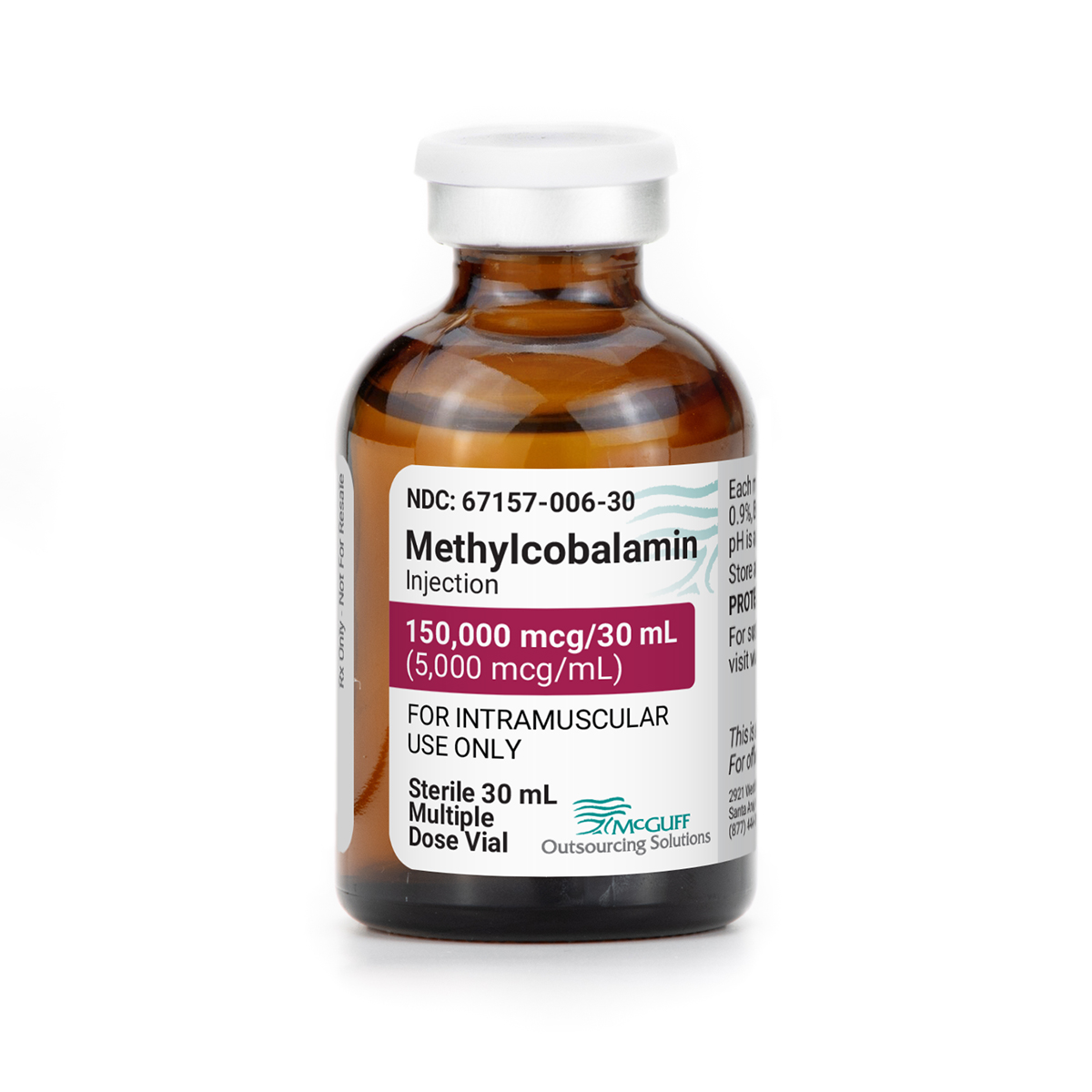
McGuff Outsourcing Solutions (MOS) is an FDA-registered 503B outsourcing facility, and we don’t compound any of the peptides on this page. So it’s fair to ask why we’re tracking them.
We only make what the law allows. For a 503B, FDA decides what we can legally compound, based in part on whether there’s a clinical need for outsourcing facilities to make it. For these peptides, that path runs through the 503B bulks list, and that process hasn’t started. HHS’s new policy covers 503A pharmacies only, so the answer for us is still no. If a lawful 503B path opens, we’ll evaluate these peptides the same way we evaluate every product.
We don’t make claims about how well they work. That’s a clinical question, and it belongs to you as the treating clinician.
What we can speak to is how a drug is made. FDA decides what can be compounded. You decide what’s right for your patient. Our job is everything in between: designing quality into the process from the start, sourcing raw materials from FDA-registered manufacturers, and testing every batch before it’s released, so the product is what the label says it is. That way you don’t have to wonder whether the drug is what it says it is. With product from an unverified source, that question never fully goes away. With ours, your questions can stay where they belong: whether it’s the right drug for this patient, and how they respond to it.
We want you to understand the market you’re buying in. Peptides reach patients today through several channels, and the claims about what’s allowed don’t always match what FDA has actually done. This page lays out where things stand, as we understand the regulations, and we’ll keep it current as FDA acts.
Status by peptide
503A = a pharmacy filling a prescription for a specific patient. 503B = an FDA-registered outsourcing facility making office stock.
| Peptide | 503A pharmacy today | 503B outsourcing facility today |
|---|---|---|
| BPC-157 | Allowed under HHS conditionsSubcutaneous, intramuscular, oral, topical | No No movement |
| TB-500 | Allowed under HHS conditionsSubcutaneous, intramuscular | No No movement |
| MOTS-c | Allowed under HHS conditionsSubcutaneous, intramuscular | No No movement |
| Epitalon | Allowed under HHS conditionsSubcutaneous, intramuscular, intermittent courses | No No movement |
| Semax | Allowed under HHS conditionsIntranasal only | No No movement |
| KPV | Allowed under HHS conditionsTopical, oral only | No No movement |
| Emideltide (DSIP) | No Not recommended by FDA advisory committee; not covered by HHS policy | No No movement |
Latest development, October 28, 2026: HHS announced it won’t take enforcement action against 503A pharmacies that compound these six peptides under its conditions, including single-ingredient products, covered routes only, and an ingredient certificate of analysis that meets HHS’s testing standard. It isn’t FDA approval, it can be withdrawn, and it doesn’t cover 503B outsourcing facilities. Read more: HHS Allows 503A Pharmacies to Compound Six Peptides, With Conditions.
Allowed isn’t the same as legal
The law hasn’t changed. These peptides still don’t meet the requirements of section 503A: they aren’t on the bulks list, they don’t have a USP monograph, and they aren’t part of an FDA-approved drug. In plain terms, the government is choosing not to enforce the rules for now, and it can change its mind at any time. HHS says it may revisit the policy if a safety signal or product-quality issue comes up. If products are made poorly and patients are harmed, the policy could be narrowed or withdrawn for everyone, including the pharmacies that followed every condition.
State boards of pharmacy and medicine were never bound by the policy, and each state may choose to be stricter than the federal government.
For practices, the question isn’t just whether a pharmacy is allowed to make these peptides. It’s whether the pharmacy meets every condition, and can show you that it does. For the full list of conditions, see HHS Allows 503A Pharmacies to Compound Six Peptides, With Conditions.
No USP monograph means no shared quality standard
None of these six peptides has a USP monograph. For most ingredients a compounder uses, the USP monograph sets the rules everyone follows: which tests to run and what results the ingredient must meet for identity, purity and strength.
Without a monograph, each supplier and each compounder sets its own specifications. Two products with the same name on the label can be made to very different standards, and from the outside they look identical. HHS’s policy sets testing for the raw ingredient, but how the finished product is made and tested still varies from pharmacy to pharmacy. That’s why the questions further down this page matter.
Where each pathway stands
503A and 503B face the same basic steps, but they run on separate tracks. Progress on one doesn’t move the other.
503A can compound under conditions. 503B hasn’t started.
503A: 3 of 6 steps done, plus temporary HHS policy in effect · 503B: 0 of 6 steps done
No step started for any of these peptides
The HHS policy is temporary. Only the last step, being added to the 503A or 503B bulks list, makes a peptide permanently eligible.
Public HHS and FDA documents and reporting, as of October 29, 2026
The 503A nominations were later withdrawn, but FDA continued its review. For 503B, the same steps would have to start from the beginning, with a separate nomination judged on whether outsourcing facilities have a clinical need to make the product.
This is our best read of the path, not an official roadmap. FDA hasn’t published a set of steps for these peptides. The chart reflects how FDA usually handles bulk substances. This situation is unusual: public and political pressure is strong, and the path may move faster or take a more direct route than we normally see. We’ll update the chart as FDA acts.
What would change the answer
- HHS revises or withdraws its policy. HHS says it may revisit the policy if a safety signal or product-quality issue comes up. 503A compounding of these peptides would then lose its protection.
- FDA issues a final rule adding or excluding a peptide on the 503A bulks list. Adding it would make that peptide permanently eligible at 503A pharmacies. Excluding it would end the HHS policy for that peptide.
- FDA adds a peptide to the 503B bulks list. That’s the permanent route to office stock from a 503B outsourcing facility, and it hasn’t started.
- A state board acts. States aren’t bound by the HHS policy and may set stricter rules for pharmacies and prescribers in their state.
What the FDA pathway protects
These peptides already reach U.S. patients by other routes. Each route skips checks the FDA pathway is built to provide.
The FDA pathway gives you:
- an ingredient FDA has evaluated for compounding use
- API from an FDA-registered manufacturer, with lot-level testing
- a licensed pharmacy (503A) or an FDA-registered, inspected facility (503B) making the product
- someone accountable: inspections, adverse event reporting, and the ability to recall a bad lot
The other routes, and what they skip:
| Route | How it works | What’s missing |
|---|---|---|
| “Research use only” online sellers | Vials sold as lab chemicals, often with bacteriostatic water on the side | Unknown sterility, identity or purity standard for human use. Unknown if anyone inspects the seller or tests the product before it ships, and there’s no adverse event reporting or recall path. FDA treats these as unapproved drugs when they’re clearly meant for injection, but it can only act after the fact, one seller at a time. |
| Direct overseas purchase | Patients or clinics order straight from foreign suppliers | No FDA registration or inspection check. Recent FDA inspections of overseas plants making compounding ingredients found mold, contamination and falsified records. Shipments can be seized. |
| A pharmacy compounding outside the HHS conditions | A 503A pharmacy makes blends, uses routes the policy doesn’t cover, or uses an ingredient without a qualifying certificate of analysis | Looks legitimate because it comes from a licensed pharmacy, but the product falls outside HHS’s enforcement discretion. The pharmacy, and possibly the prescribing practice, carries the regulatory and liability risk. |
| In-office mixing from bulk powder | A clinic reconstitutes powder bought from any of the above | Inherits every problem of the source, with no sterile compounding controls. |
What this means for your practice: if a product can’t be traced to a lawful pathway, you can’t verify what’s in the vial, and you may own the risk if something goes wrong. Our recommendation is to ask your state board how they view it. The FDA pathway is slower, but every step can be checked.
Six questions to ask any pharmacy offering these peptides
With no USP monograph behind these peptides, the pharmacy you choose matters more than usual. Before you order, ask:
-
“Is this a single-ingredient product, in a route the HHS policy covers?”
Red flag: blends, or routes outside the policy, such as injectable Semax.
-
“Who is the original manufacturer of the peptide API, and what is its FDA registration (FEI) number?”
Check: the manufacturer’s name and location appear on the certificate of analysis, and the registration matches in FDA’s database.
Red flag: only a distributor’s name, or “that’s proprietary.”
-
“Send me the certificate of analysis for the raw ingredient.”
Check: it names the original manufacturer with its FEI number, and the grade reads “Intended for human drug compounding.”
Red flag: a generic “sample” certificate, or a grade like “research use only.”
-
“Do you test potency on every finished lot, and can you send me the results for the lot you’ll ship, along with sterility and endotoxin?”
Why it matters: sterility and endotoxin results tell you the product is clean. Potency tells you the dose is what the label says. Federal rules don’t generally require 503A pharmacies to potency-test every lot, so many don’t. A pharmacy that does, and can show you the results for your lot, is giving you real evidence it makes what it says it makes.
Check: the lot numbers match your order, and the potency result matches the strength on the label.
Red flag: “we test periodically,” or no potency testing at all.
-
“When was this lot compounded, and was it made under the policy’s conditions?”
The policy was announced October 28, 2026. Ask how earlier lots were made.
-
“Are you licensed to ship to my state?”
Check: the pharmacy holds a license, or a nonresident license, in your state.
Federal enforcement discretion doesn’t bind state boards of pharmacy or medicine. If you’re unsure whether your state allows these products, ask your state board.
If you choose to use these peptides, potency testing on every lot is one of the clearest signs a pharmacy can back up its label. Remember that 503A products are compounded for individual patients, so you can’t keep them as office stock.
The legal path so far for 503A and 503B Drug Compounding
The major developments, newest first. Where we’ve written about one, the summary links to the full article.
October 28, 2026
HHS allows 503A compounding of six peptides, with conditions
HHS announced an enforcement discretion policy for BPC-157, TB-500, KPV, MOTS-c, Epitalon and Semax. It won’t take enforcement action against 503A pharmacies and physicians that meet its conditions, including single-ingredient products, covered routes and an ingredient certificate of analysis that meets HHS’s testing standard. It isn’t FDA approval, it can be withdrawn, and it doesn’t cover 503B outsourcing facilities.
Read more: HHS Allows 503A Pharmacies to Compound Six Peptides, With Conditions.October 15, 2026
Interim policy sent to White House review
HHS and FDA sent an “Interim Access Policy for Compounding Using Certain Peptides” to the White House for review. Reports say it would temporarily allow some peptides, including BPC-157, at state-licensed pharmacies. It hasn’t been published, so its scope, conditions and timing are unknown. HHS announced the policy on October 28.
Read more: The White House Is Reviewing an FDA Peptide Policy. Here’s What That Means.August 24, 2026
FDA warns several online peptide sellers
FDA issued warning letters to several online sellers of injectable peptides. Each seller labeled its products “research use only,” and FDA rejected that label in every case. It pointed to dosing guides, reconstitution calculators and bacteriostatic water sold alongside the vials as evidence the products were meant for human injection. The letters show FDA is still enforcing against the gray market while it reviews these peptides.
July 23–24, 2026
Advisory committee recommends six peptides for 503A
FDA’s Pharmacy Compounding Advisory Committee recommended BPC-157, KPV, TB-500, MOTS-c, Epitalon and Semax for the 503A bulks list, and voted against Emideltide. FDA’s own reviewers had recommended against all of them. The vote is advice to FDA, not permission to compound, and it doesn’t apply to 503B.
Read more: FDA Advisory Committee Recommends Six Peptides for 503A CompoundingBefore July 2026
Nominations withdrawn, FDA review continues
The peptides had been nominated for the 503A bulks list and placed in FDA’s Category 2 over safety concerns. The nominations were later withdrawn, which removed them from Category 2, but FDA kept reviewing them and took them to the advisory committee.
What we make today
This page is educational and is not legal or medical advice. It does not address whether any peptide is safe or effective; that’s a question for the treating clinician.
McGuff Outsourcing Solutions is a DBA of McGuff Pharmaceuticals, Inc., an FDA-registered 503B outsourcing facility. Compounded drugs are not FDA approved. FDA approval applies to drugs reviewed through a New Drug Application (NDA) or Abbreviated New Drug Application (ANDA). Compounded drugs are regulated under a separate framework: 503A pharmacies are overseen primarily by state boards of pharmacy, and 503B outsourcing facilities register with FDA, are inspected by FDA and must follow CGMP requirements. FDA does not review compounded drugs for safety, effectiveness or quality before they reach patients. This article is for educational purposes for healthcare professionals.