
FDA Glutathione Injection Reminder: MOS Quality & Safety
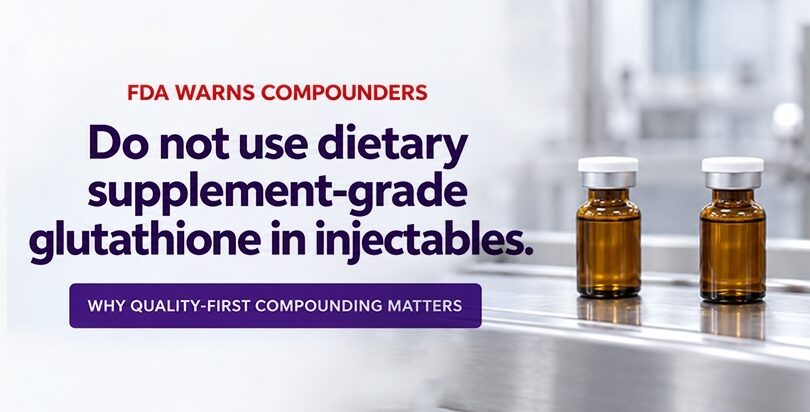
On August 27, 2026, the U.S. Food and Drug Administration issued an important reminder regarding the use of dietary supplement‑grade glutathione in injectable preparations.
FDA emphasized that dietary supplement-grade ingredients are not appropriate for making injectable drugs and may contain impurities or contaminants, including endotoxins, that can present significant risks when administered by injection.
For physicians considering Glutathione Injection from McGuff Outsourcing Solutions (MOS), we want to answer two important questions clearly.
Does MOS use dietary supplement-grade glutathione API?
MOS does not use dietary supplement-grade glutathione API in the manufacture of Glutathione Injection.
Our quality program begins with the sourcing and qualification of API appropriate for its intended pharmaceutical use. Suppliers and incoming materials are evaluated under our established quality systems before an API is released for manufacturing.
Does MOS test Glutathione Injection for bacterial endotoxins?
Each finished batch of MOS Glutathione Injection is tested for bacterial endotoxins against established acceptance criteria before release.
Finished-product testing also includes sterility, potency, impurities, particulate matter, and other applicable quality attributes. Each batch is released only after review and approval by the MOS Quality Unit.
Quality Starts at the Source
FDA’s recent communication reinforces an important principle: finished-product testing alone cannot assure the quality of an injectable drug. Quality must be built into the entire process—from appropriate API sourcing and supplier qualification through manufacturing, testing, and final batch release.
That principle is fundamental to how McGuff Outsourcing Solutions manufactures sterile medications.
In Short
No dietary supplement-grade glutathione API.
Every finished batch tested for bacterial endotoxins.
Quality built into the process from API sourcing through final release.
Quality Principle
The quality of a sterile drug product cannot exceed the quality of its Active Pharmaceutical Ingredient (API).
Further Information for Physicians
For physicians who administer or are considering compounded injectable glutathione, FDA’s advisory raises broader questions about why the source, intended use, manufacturing controls, and testing of the raw material are important.
Table of Contents
- Why Dietary Supplement-Grade and Injectable Ingredients Are Different
- Why Bacterial Endotoxins Matter
- Quality Begins With the Raw Material
- Finished-Product Testing
- Why Testing Alone Cannot Assure Quality
- Questions Physicians Should Ask of Their Drug Supplier to Ensure Patient Safety
- What the FDA Advisory Means for Physicians
1. Why Dietary Supplement-Grade and Injectable Ingredients Are Different
An ingredient intended for an oral dietary supplement should not be assumed to be appropriate for manufacturing an injectable drug.
Although dietary supplement-grade glutathione and glutathione used to manufacture an injectable drug may share the same ingredient name, their intended uses, manufacturing controls, and quality specifications can be very different.
This distinction is particularly important for injectable products.
An orally administered substance passes through the gastrointestinal system. An intravenous product is introduced directly into the bloodstream, bypassing many of the body’s natural protective barriers.
Raw materials used to manufacture injectable drugs therefore need to be produced and controlled according to quality specifications appropriate for their intended pharmaceutical use.
FDA’s advisory specifically reminds compounders not to use glutathione labeled for dietary supplement use to manufacture injectable drugs.
2. Why Bacterial Endotoxins Matter
One of the specific concerns identified by FDA is bacterial endotoxin contamination.
Endotoxins are components associated with certain bacteria. Importantly, endotoxins may remain even when viable bacteria are no longer present.
When excessive amounts of bacterial endotoxins are introduced through an injectable product, patients can experience serious reactions. FDA’s advisory reported adverse events including fever, chills, pain, dizziness, signs of shock, and sepsis-like symptoms, with some patients requiring hospitalization.
This illustrates why controlling endotoxins is particularly important for products intended for injection.
At MOS, each finished batch of Glutathione Injection is tested for bacterial endotoxins against established acceptance criteria before release.
3. Quality Begins With the Raw Material
Identifying a powder simply as “glutathione” does not establish that it is appropriate for manufacturing a sterile injectable drug.
The source of the material, original manufacturer, intended use, manufacturing controls, and applicable quality specifications all matter.
MOS’s quality program therefore begins before the glutathione raw material enters the manufacturing process.
Evaluation of incoming glutathione API includes consideration of information such as:
- Identity and source of the API
- Original API manufacturer
- Intended pharmaceutical use
- Applicable specifications and quality standards
- Supplier qualification information
- API labeling and Certificate of Analysis
- Incoming material testing and review
- Quality Unit approval before use
These controls are intended to help establish that the material is appropriate for its intended pharmaceutical use and meets applicable requirements before entering manufacturing.
4. Finished-Product Testing
Raw-material qualification is only one part of the quality process.
Each finished batch of MOS Glutathione Injection undergoes established release testing before it can be approved for distribution.
Testing includes:
- Bacterial endotoxins
- Sterility
- Potency
- Impurities
- Particulate matter
- Other applicable quality attributes
The MOS Quality Unit reviews applicable manufacturing documentation and testing results before determining whether a batch may be released.
A batch is released only after applicable manufacturing, testing, and quality requirements have been satisfied.
5. Why Testing Alone Cannot Assure Quality
FDA makes another important point in its advisory: finished-product testing alone is not sufficient to assure drug quality.
Testing is an essential component of pharmaceutical quality, but finished-product tests are generally performed on samples from a batch. Testing cannot replace appropriate controls throughout sourcing and manufacturing.
For a sterile injectable product, quality must therefore extend throughout the process, including:
- Selection of an appropriate pharmaceutical ingredient
- Qualification of suppliers and manufacturers
- Incoming-material review and testing
- Controlled storage and handling
- Controlled manufacturing processes
- Environmental and contamination controls
- In-process monitoring
- Finished-product testing
- Quality Unit review
- Final batch-release approval
The relevant question is therefore broader than simply: “Was the finished product tested?”
Physicians should also consider:
“Was an appropriate raw material used, and was quality controlled throughout the entire manufacturing process?”
6. Questions Physicians Should Ask of Their Drug Supplier to Ensure Patient Safety
FDA recommends that healthcare professionals check with their compounders regarding the source of glutathione used to make injectable drugs.
Physicians evaluating a source of compounded injectable glutathione may therefore want to ask:
- Do you use dietary supplement-grade glutathione?
- Is the raw material intended for pharmaceutical use rather than only oral or dietary supplement use?
- How do you determine that the material is appropriate for its intended pharmaceutical use?
- How are the supplier and original manufacturer evaluated?
- Is each finished batch tested for bacterial endotoxins?
- What other finished-product testing is performed?
- Does a Quality Unit review and approve each batch before release?
For the two questions most directly raised by FDA’s advisory, MOS’s answers are straightforward:
Dietary supplement-grade glutathione? No.
Finished-batch bacterial endotoxin testing? Yes.
7. What the FDA Advisory Means for Physicians
FDA’s August 27 advisory reinforces an important distinction: the name of an ingredient does not, by itself, establish its suitability for injection.
The intended use, source, manufacturing controls, quality specifications, and testing of the raw material all matter.
Finished-product testing provides another essential layer of control, but it cannot compensate for the use of an inappropriate starting material or replace supplier qualification, manufacturing controls, contamination controls, and Quality Unit oversight.
At McGuff Outsourcing Solutions, quality begins with selection and qualification of the raw material and continues through manufacturing, finished-product testing, Quality Unit review, and final batch release.
Quality starts with the material and continues through the entire manufacturing process.
McGuff Outsourcing Solutions is an FDA-registered 503B outsourcing facility.
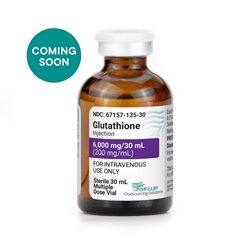
Glutathione Injection is not currently available for ordering and is progressing through final validation, manufacturing, testing, and Quality Unit release activities. Commercial availability is anticipated in the coming months.
Compounded drugs are not FDA approved. FDA does not verify the safety, effectiveness, or quality of compounded drugs before they are marketed.